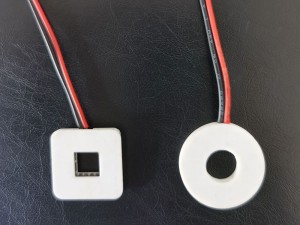
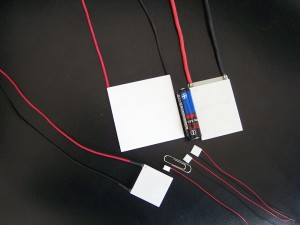
Featured Thermoelectric Cooling Units

The Growing Demand for CPU Coolers & Thermal Management in Nigeria
Nigeria, as the largest economy in Africa, is experiencing an unprecedented digital revolution. The rapid expansion of tech hubs in cities like Lagos (often referred to as the "Silicon Valley of Africa"), Abuja, and Port Harcourt has accelerated the establishment of localized data centers, enterprise server farms, and high-performance computing labs. With this rapid expansion of computing infrastructure comes a critical challenge: thermal management.
Nigeria’s tropical climate, characterized by high ambient temperatures often exceeding 35°C and high humidity levels, poses a severe threat to computer processors (CPUs), server stacks, and telecommunication hardware. Traditional passive air cooling solutions are often insufficient to prevent thermal throttling, which degrades system performance and drastically shortens hardware lifespans. As a result, the market for advanced CPU coolers, especially active thermoelectric cooling (TEC) modules, is expanding rapidly.

Why Active Thermoelectric Cooling is Essential for Nigeria's Infrastructure
Conventional CPU coolers rely entirely on the temperature differential between the hot processor and the surrounding air. In hot Nigerian climates, this differential is narrow, limiting heat dissipation. Thermoelectric CPU coolers, using Peltier technology, actively pump heat away from the silicon die using electrical current. This allows the CPU to operate at temperatures lower than the ambient room temperature, unlocking maximum clock speeds and ensuring 100% system stability for mission-critical operations.
Furthermore, remote telecommunication base stations scattered across Nigeria's diverse geographic regions—from the humid Niger Delta to the arid northern plains—require robust, low-maintenance cooling. Dust accumulation is a major failure point for traditional rotary fan coolers. Thermoelectric cooling modules, having no moving parts, offer solid-state reliability that operates flawlessly in dusty and harsh environments, drastically reducing maintenance overheads for local telecom giants and network providers.
Where Thermoelectric CPU Coolers Drive Innovation in Nigeria
1. Telecom Base Stations & Edge Computing
With the rollout of 5G networks across Nigeria, telecom towers require localized edge servers to process data with low latency. These outdoor enclosures face extreme weather. Thermoelectric cooling units protect the processing cores from overheating without the risk of dust clog or mechanical wear.
2. Solar-Powered Off-Grid Data Centers
As Nigeria embraces solar energy to offset power grid instability, green data centers are emerging. Thermoelectric power generators and low-power TEC modules can be integrated with solar arrays to provide energy-efficient, self-sustaining cooling loops for local server racks.
3. Medical Equipment & Lab Analyzers
Hospitals and medical laboratories across Nigeria use high-precision diagnostic equipment. Micro thermoelectric cooling modules provide precise temperature control for laser diodes and biological samples, ensuring accurate test results under variable room temperatures.
About Beijing Huimao Cooling Equipment Co., Ltd.
Beijing Huimao Cooling Equipment Co., Ltd. works at thermoelectric world market since 1996. Beijing Huimao Cooling Equipment Co.,Ltd is a world wide company with many years experience, specializing in the researches, designs and manufacturing of thermoelectric cooling modules and complete products. Our other technologies including bottled water cooler, thermoelectric cooling module, Mini Cooler, heat/cool car seat cushion and warm/cool sleep pad, thermoelectric therapy pad.
Beijing Huimao Cooling product line includes a full range of standard, single-stage, Thermoelectric cooling module, thermoelectric modules, Peltier cooler, Thermoelectric coolers, TEC module, Thermoelectric cooling, thermoelectric module. as well as standard and custom multi-stage TEC modules configured to meet the needs of specific applications. We currently introduce over 400 types of regular thermoelectric cooling modules, TEC modules that serve a wide variety of thermoelectric products applications. The TEC modules physical dimensions vary from 4.2 x 4.2 mm to 62 mm x 62 mm with the cooling capacity values of 0.1 Watts to 400 Watts respectively.
Huimao provide fully configured, custom designed assemblies incorporating thermoelectric cooling modules with heat sink, heat pipe, customer supplied parts, etc. Huimao supports all of its products with extensive technical and design assistance. All components are 100% tested prior to shipment. We strive to offer the global customers the high quality solutions and good price for OEM and end user. Our products are exporting North America, South America, EU, Western Asia, Japan, India and Australia market.
Our other factory, Beijing Huayu-Landian Refrigeration Technology Co.,Ltd, established in 2000, which manufacture the thermoelectric cooling complete products including thermoelectric cooling water coolers, warm/cold sleep pads, heat/cool car seat cushions and personal mini coolers. They have the combined capacity to produce over 200,000 units per annum.


Quality Guarantee of Huimao Thermoelectric Modules
Ensuring the quality and maintaining high levels of reliability can be considered as two of the main strategic goals for Huimao’s top engineers during the process of designing a product. All Huimao products must undergo a strict evaluation and examination process prior to shipment. Every module must pass two anti-moisture testing processes to ensure the protection mechanisms are fully functional (and to prevent any future failures caused by moistures). In addition, more than ten quality control points have been put in place to supervise the production process.
Huimao’s thermoelectric cooling module, TEC modules have on average an expected useful life of 300 thousand hours. In addition, our products have also passed the severe test of alternating the cooling and heating process within very short time. The test is conducted by a repeated cycle of connecting thermoelectric cooling module, TEC modules to electric current for 6 seconds, pause for 18 seconds and then the opposite current for 6 seconds. During the test, the current may force the hot side of the module to heat up to as high as 125℃ within 6 seconds and then cool it down. The cycle repeats itself for 900 times and the total testing time is 12 hours.
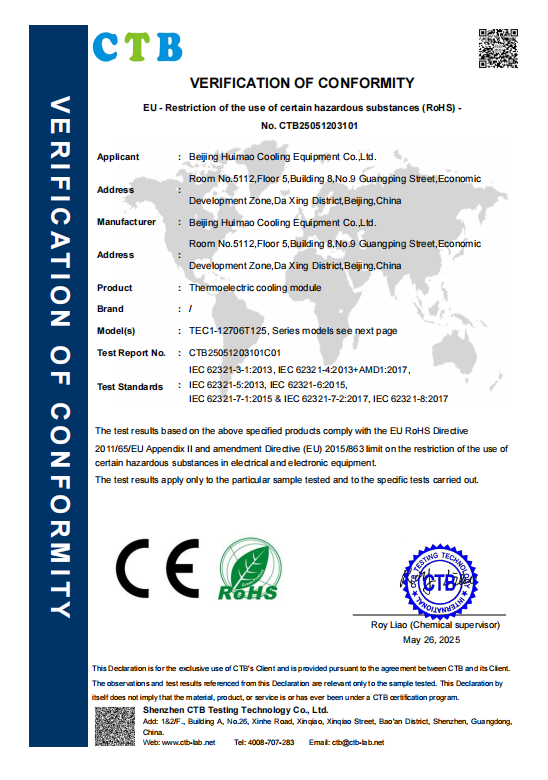
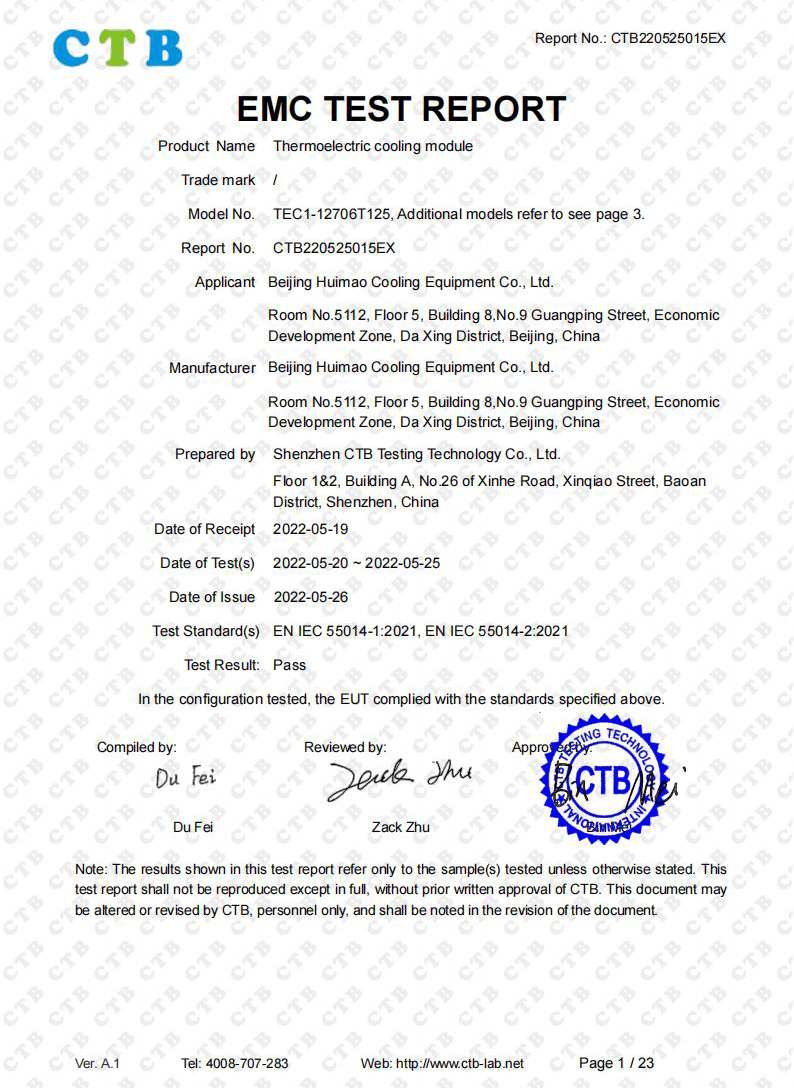
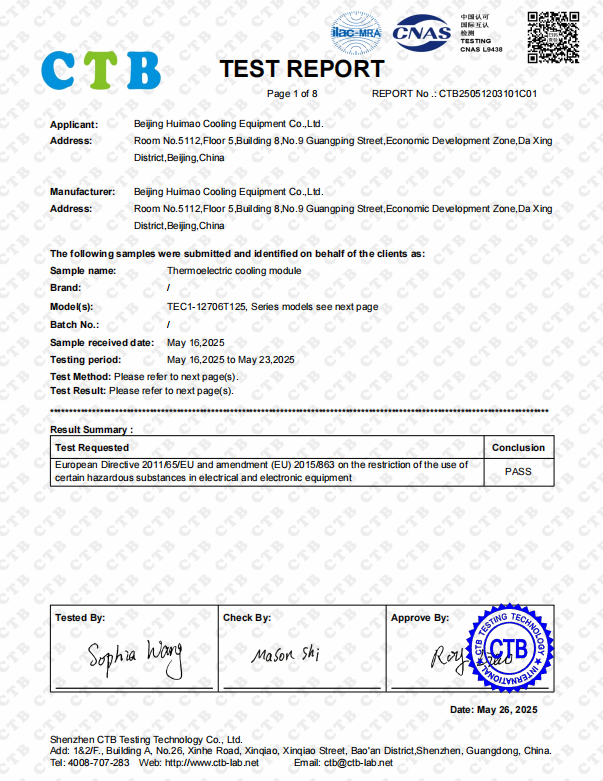
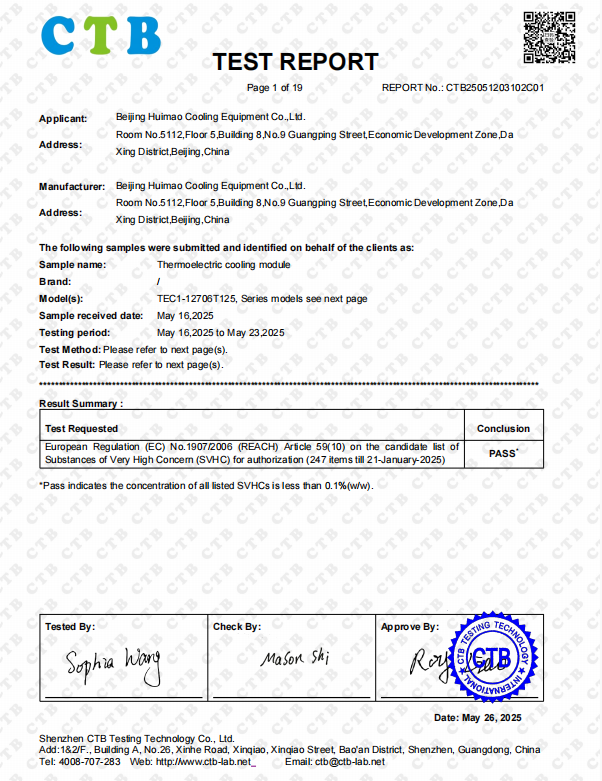
International Standards & Certifications
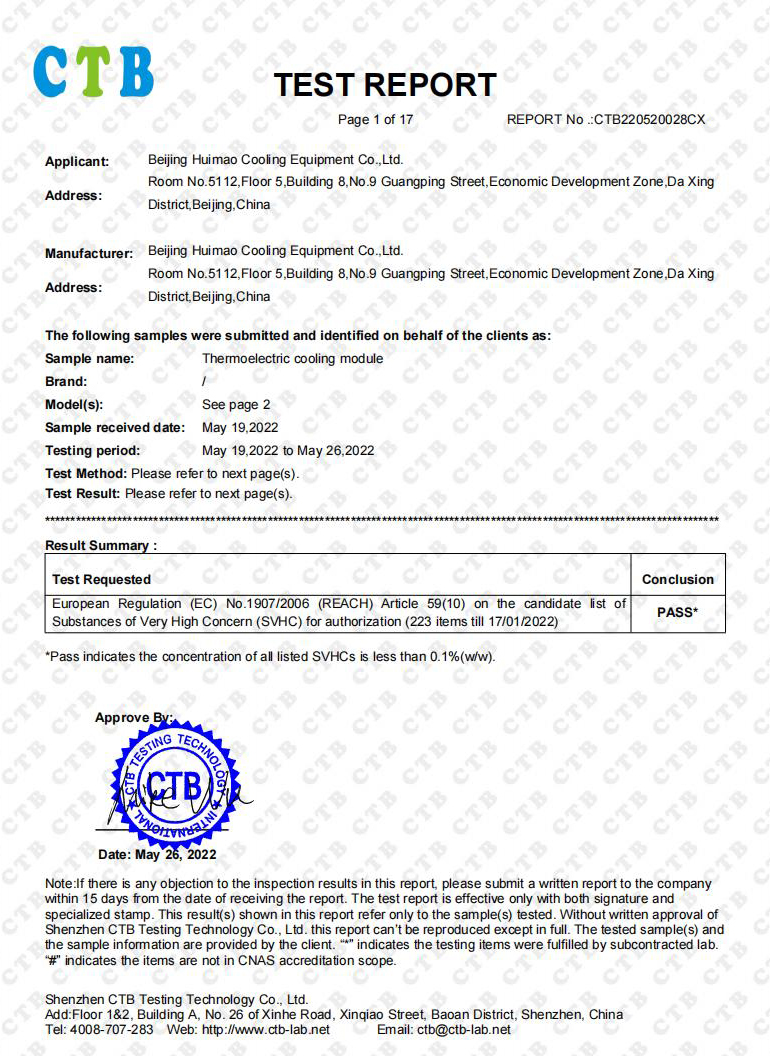
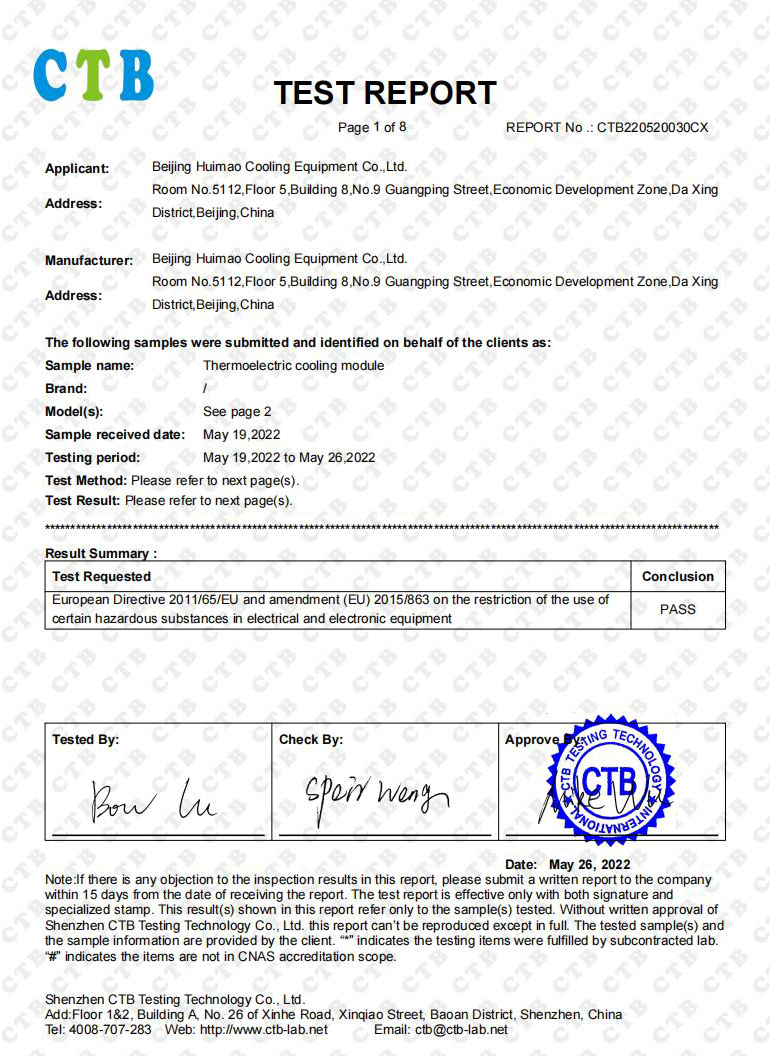
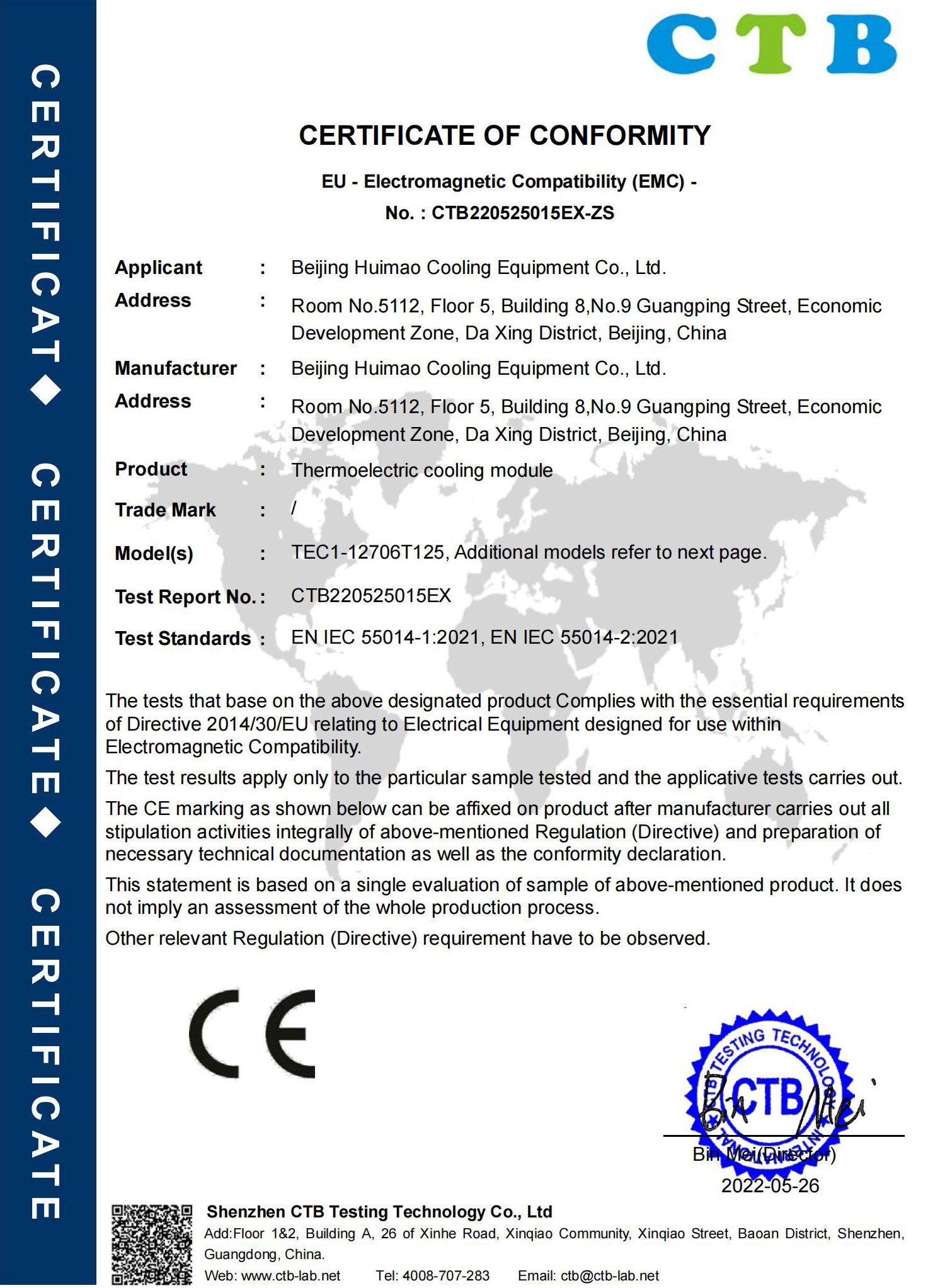
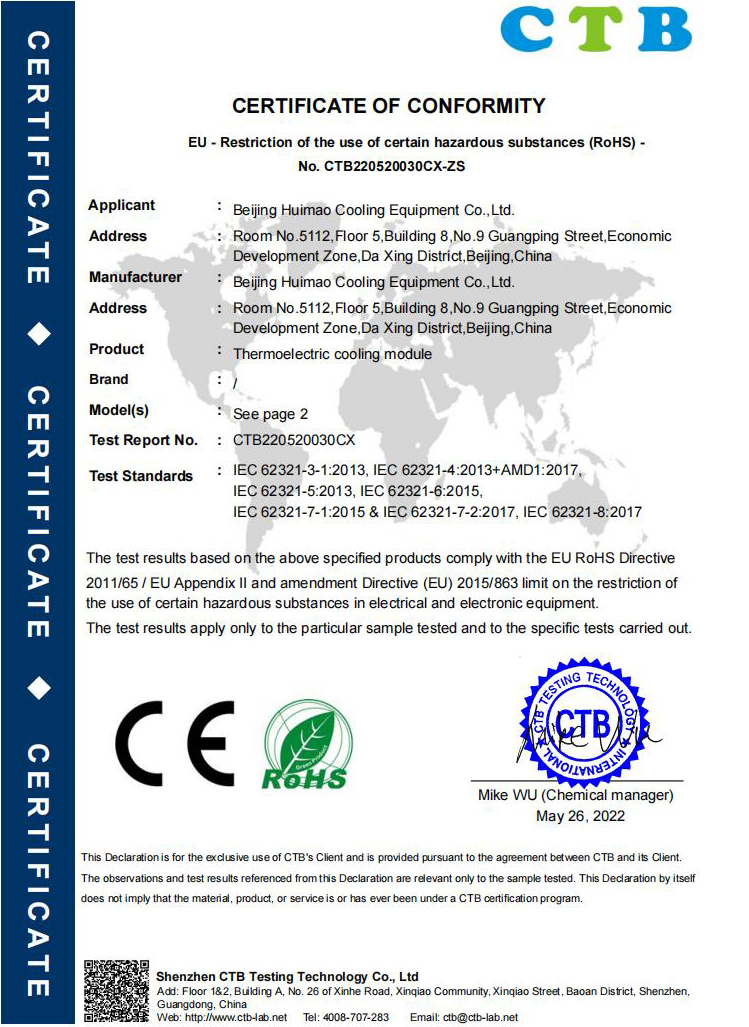
Our products are certified by international testing bodies, ensuring safe, green, and high-performance operations across all industries.
Industry Trends: The Future of CPU Cooling in Nigeria
As the demand for artificial intelligence (AI), machine learning models, and blockchain processing grows within Nigeria's fintech and software industries, local developers and enterprises are utilizing power-hungry GPUs and high-core-count CPUs. These processors generate heat loads that exceed the dissipation limits of standard air-cooling systems. The future lies in hybrid cooling systems that combine liquid loops with integrated thermoelectric cooling modules to target local hotspots dynamically.
Furthermore, global sustainability mandates are urging manufacturers and operators to minimize energy consumption. Thermoelectric coolers are highly controllable; their cooling capacity can be adjusted in real-time by modulating the input current. This precision prevents over-cooling and saves energy compared to continuously running high-RPM air conditioning systems in server rooms. As direct exporters to the Nigerian market, Beijing Huimao is committed to supplying customized, energy-efficient TEC modules that align with local environmental and economic realities.
Thermoelectric Cooling Solutions & Modules
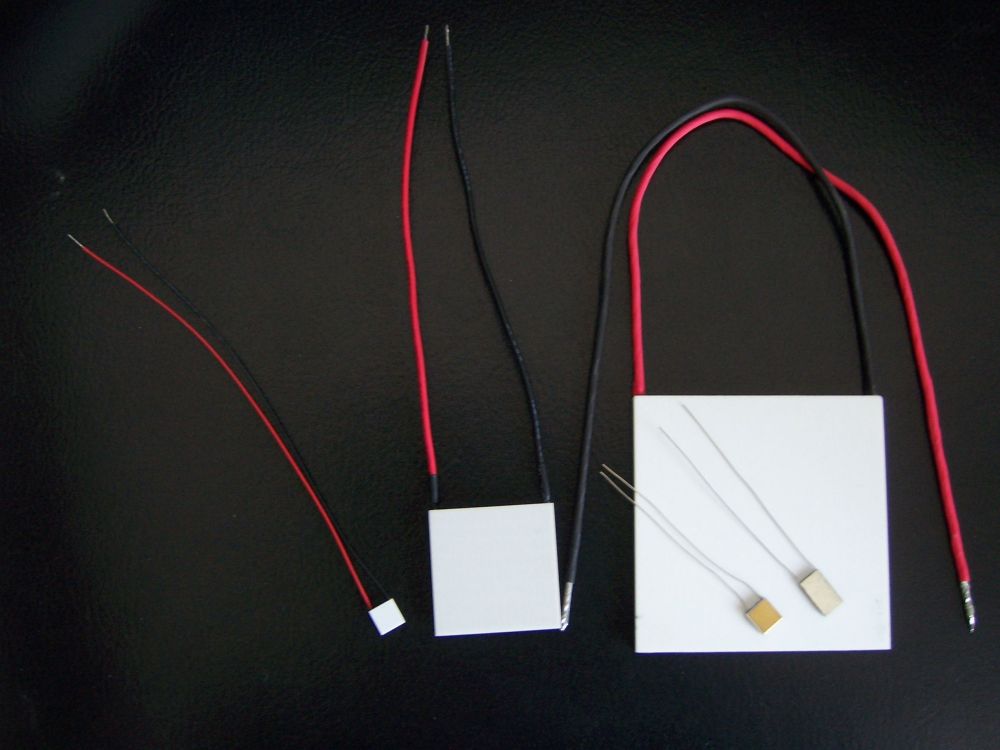
Micro Thermoelectric Cooling Module
Learn More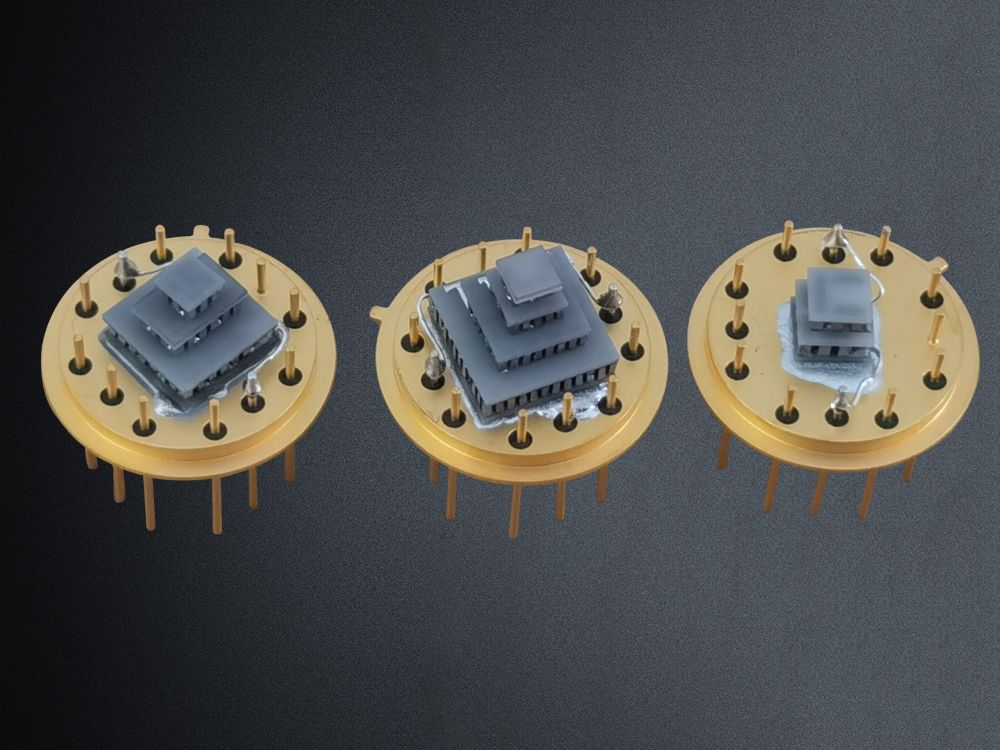
Customized Thermoelectric Cooling Module
Learn More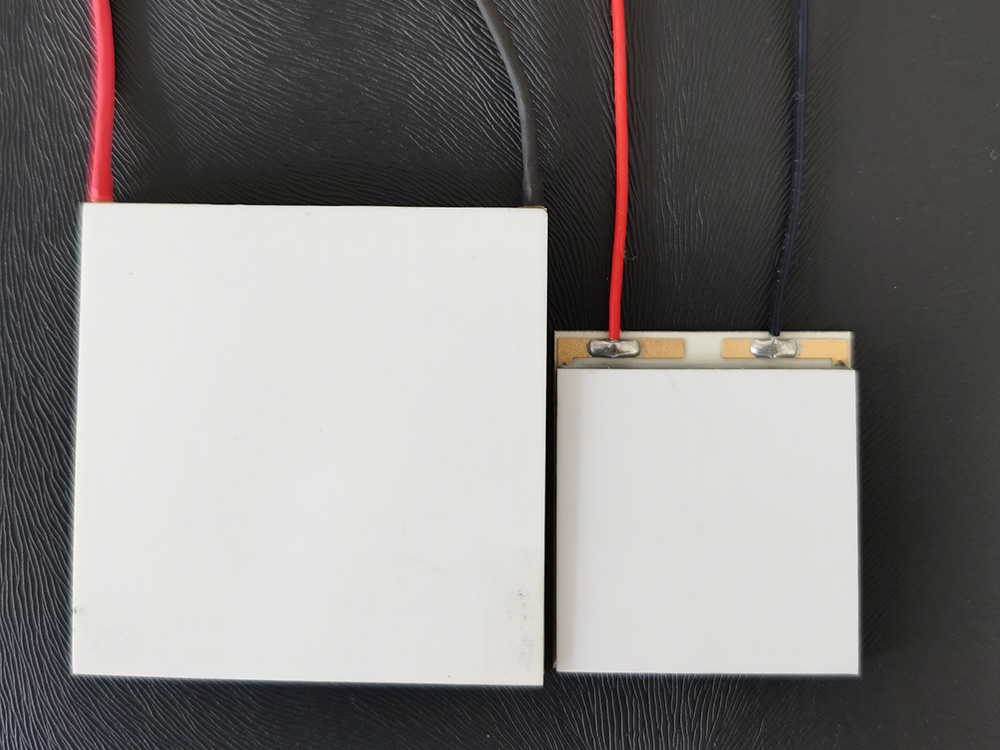
Thermoelectric Power Generator
Learn More
Center Hole & Round Thermoelectric Cooling Module
Learn More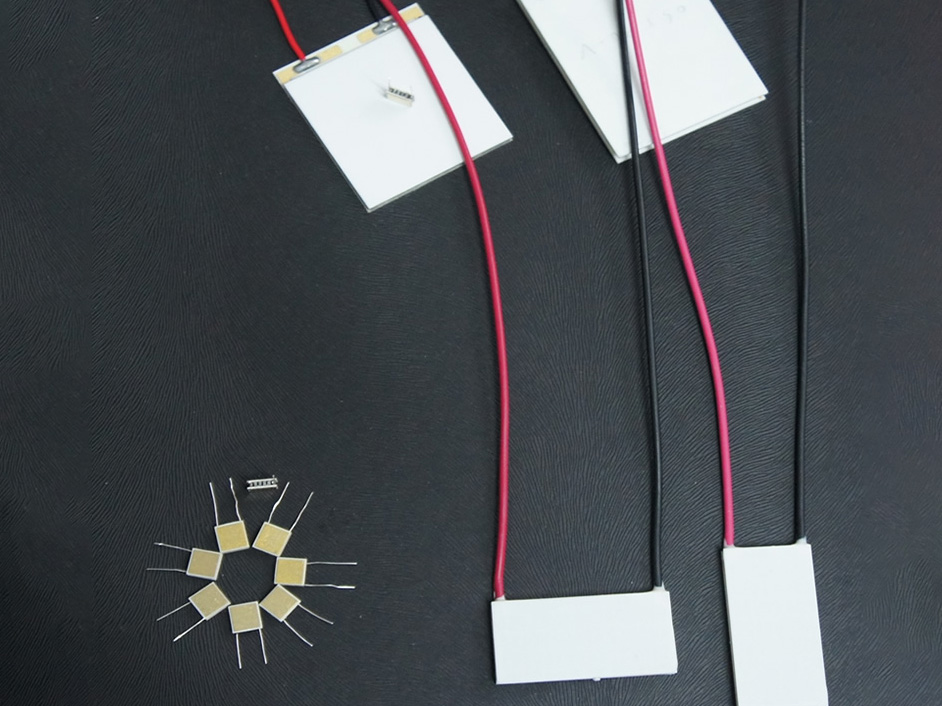
Standard Thermoelectric Cooling Module
Learn More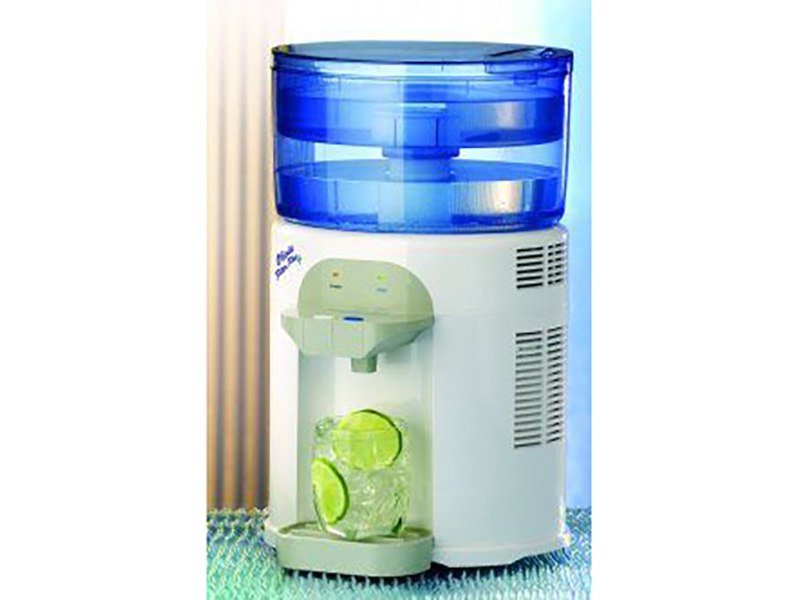
Thermoelectric Cooling Water Cooler
Learn More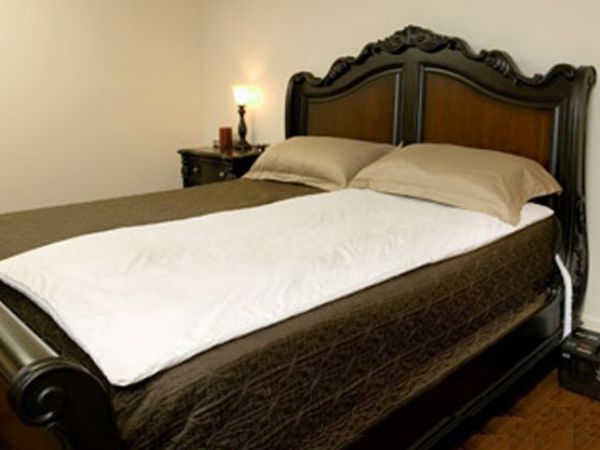
Thermoelectric Cool/Heat Comfortable Cotton Sleep Pad
Learn More
High Power Thermoelectric Cooling Module
Learn More-

E-mail
-

Phone
-

Top


