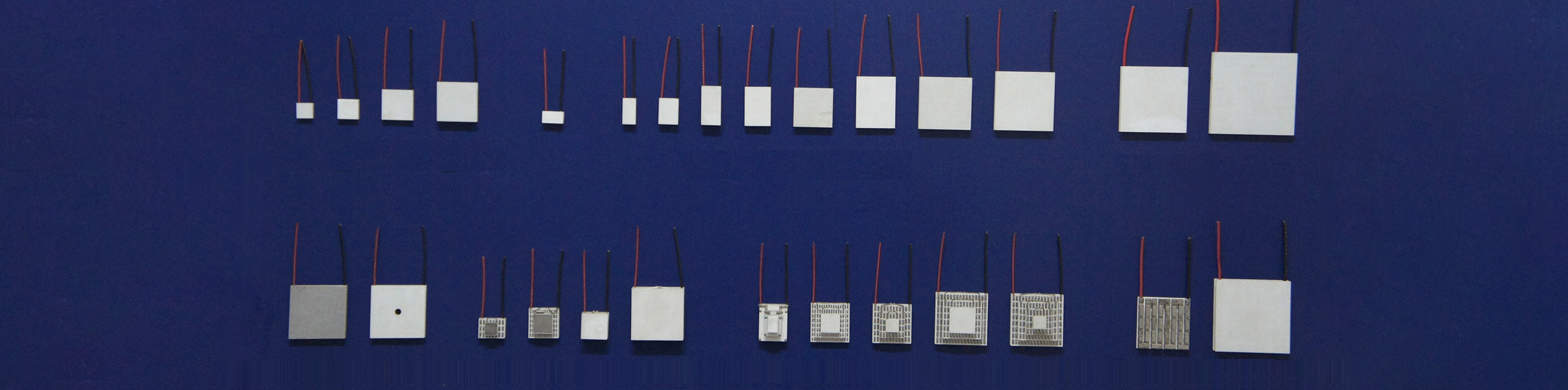
The latest development achievements of thermoelectric cooling modules
I. Breakthrough Research on Materials and Performance Limits
1.The deepening of the concept of “phonon glass – electronic crystal”: •
Latest achievement: Researchers have accelerated the screening process for potential materials with extremely low lattice thermal conductivity and high Seebeck coefficient through high-throughput computing and machine learning. For instance, they discovered Zintl phase compounds (such as YbCd2Sb2) with complex crystal structures and cage-shaped compounds, whose ZT values exceed those of traditional Bi2Te3 within specific temperature ranges. •
“Entropy engineering” strategy: Introducing compositional disorder in high-entropy alloys or multi-component solid solutions, which strongly scatters phonons to significantly reduce thermal conductivity without seriously compromising electrical properties, has become an effective new approach for enhancing the thermoelectric figure of merit.
2.Frontier Advances in Low-Dimensional and Nanostructures:
Two-dimensional thermoelectric materials: Studies on single-layer/monolayer SnSe, MoS₂, etc. have shown that their quantum confinement effect and surface states can lead to extremely high power factors and extremely low thermal conductivity, providing the possibility for the fabrication of ultrathin, flexible micro-TECs. micro thermoelectric cooling modules, micro peltier coolers(Micro peltier elements).
Nanometer-scale interface engineering: Precisely controlling microstructures such as grain boundaries, dislocations, and nano-phase precipitates, as “phonon filters”, selectively scattering thermal carriers (phonons) while allowing electrons to pass through smoothly, thereby breaking the traditional coupling relationship of thermoelectric parameters (conductivity, Seebeck coefficient, thermal conductivity).
II. Exploration of New Refrigeration Mechanisms and Devices
1. on-based thermoelectric cooling:
This is a revolutionary new direction. By utilizing the migration and phase transformation (such as electrolysis and solidification) of ions (rather than electrons/holes) under an electric field to achieve efficient heat absorption. The latest research shows that certain ionic gels or liquid electrolytes can generate much larger temperature differences than traditional TECs , peltier modules, TEC modules, Thermoelectric coolers, at low voltages, opening up a completely new path for the development of flexible, silent, and highly efficient next-generation cooling technologies.
2. Attempts at miniaturization of refrigeration using electric cards and pressure cards: •
Although not a form of thermoelectric effect, as a competing technology for solid-state cooling, the materials (such as polymers and ceramics) can exhibit significant temperature variations under electric fields or stress. The latest research is attempting to miniaturize and array the electrocaloric/pressurcaloric materials, and conduct a principle-based comparison and competition with TEC, peltier module, thermoelectric cooling module, Peltier device in order to explore ultra-low-power micro-cooling solutions.
III. Frontiers of System Integration and Application Innovation
1 . On-chip integration for “chip-level” heat dissipation:
The latest research focuses on integrating micro TEC,micro thermoelectric module, (thermoelectric cooling module), peltier elements, and silicon-based chips monolithically (in a single chip). Using MEMS (Micro-Electro-Mechanical Systems) technology, micro-scale thermoelectric column arrays are directly fabricated on the backside of the chip to provide “point-to-point” real-time active cooling for local hotspots of CPUs/GPUs, which is expected to break through the thermal bottleneck under the Von Neumann architecture. This is considered one of the ultimate solutions to the “heat wall” problem of future computing power chips.
2. Self-powered thermal management for wearable and flexible electronics:
Combining the dual functions of thermoelectric power generation and cooling. The latest achievements include the development of stretchable and high-strength flexible thermoelectric fibers. These can not only generate electricity for wearable devices by utilizing temperature differences, but also achieve local cooling (such as cooling special work uniforms) through reverse current, achieving integrated energy and thermal management.
3. Precise temperature control in quantum technology and biosensing:
In cutting-edge fields such as quantum bits and high-sensitivity sensors, ultra-precise temperature control at the mK (millikelvin) level is essential. The latest research focuses on multi-stage TEC, multi- stage peltier module (thermoelectric cooling module) systems with extremely high precision (±0.001°C) and explores the use of TEC module ,peltier device, peltier cooler, for active noise cancellation, aiming to create an ultra-stable thermal environment for quantum computing platforms and single-molecule detection devices.
IV. Innovation in Simulation and Optimization Technologies
Artificial Intelligence-driven Design: Utilizing AI (such as generative adversarial networks, reinforcement learning) for “material-structure-performance” reverse design, predicting the optimal multi-layer, segmented material composition and device geometry to achieve the maximum cooling coefficient within a wide temperature range, significantly shortening the research and development cycle.
Summary:
The latest research achievements of peltier element, thermoelectric cooling module(TEC module) are moving from “improvement” to “transformation”. The key features are as follows: •
Material level: From bulk doping to atomic-level interfaces and entropy engineering control. •
At the fundamental level: From relying on electrons to exploring new charge carriers such as ions and polarons.
Integration level: From discrete components to deep integration with chips, fabrics, and biological devices.
Target level: Moving from macro-level cooling to addressing the thermal management challenges of cutting-edge technologies such as quantum computing and integrated optoelectronics.
These advancements indicate that future thermoelectric cooling technologies will be more efficient, miniaturized, intelligent, and deeply integrated into the core of next-generation information technology, biotechnology, and energy systems.
Post time: Mar-04-2026


