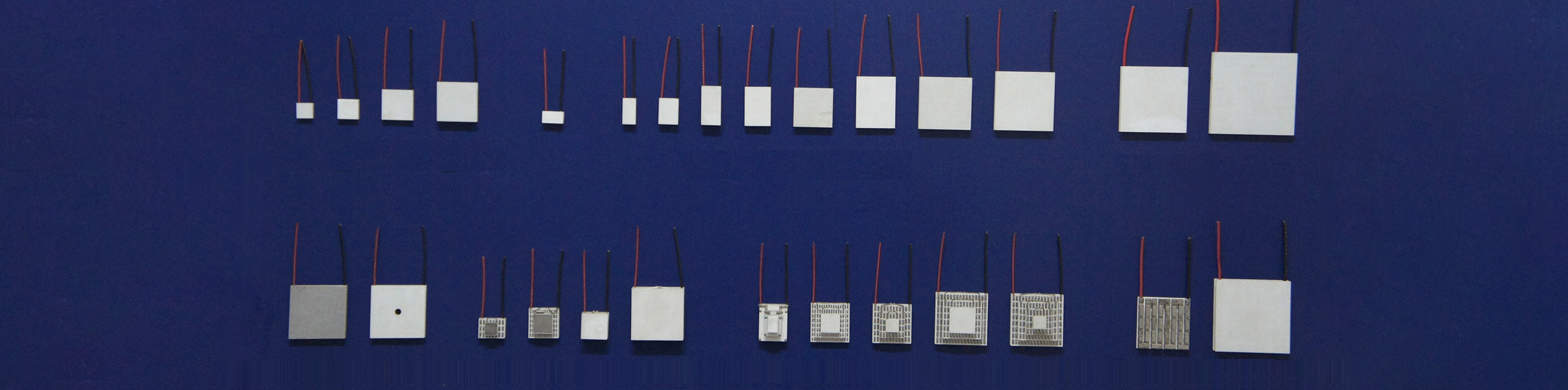
In the context of surging global demand for AI computing power, micro-thermoelectric coolers (micro-TECs)—ultra-compact thermoelectric cooling devices—are evolving from auxiliary components in optical interconnects to mission-critical enablers of thermal management in AI data centers.
Below is a concise, evidence-based analysis of market outlook and domestic substitution potential:
1. Market Size Forecast: AI-Driven Acceleration
The exponential growth in computational requirements for large-language-model training and inference has catalyzed rapid expansion in micro-TEC(micro thermoelectric module) adoption worldwide and in China:
a) Global market expansion: Consensus forecasts from leading industry research institutions project the global micro-TEC, micro peltier modlue (micro-thermoelectric cooling module)market to reach USD 1.2–15.5 billion between 2031 and 2033, representing a compound annual growth rate (CAGR) of approximately 8.5%.
b) Outperformance in China: Fueled by the rapid scaling of domestic optical module manufacturers, China’s micro-TEC, micro peltier element (micro thermoelectric module) market growth significantly exceeds the global average. Projections indicate that China’s TEC module (thermoelectric cooling module)market will reach RMB 2.82 billion by 2029, while the global market is expected to surpass USD 10 billion.
c) Rising AI-centric share: AI compute infrastructure and high-speed optical interconnects constitute the primary growth vectors. By 2031, AI-related applications are projected to account for nearly 50% of total micro-TEC, Micro-peltier module demand.
2. Structural Growth Drivers from AI Compute Infrastructure
The architectural evolution of AI data centers is generating substantial structural demand for Micro- thermoelectric cooling module,micro-TECs(micro-thermoelectric modules), micro TEC modules, micro-peltier devices:
a) High-speed optical modules as key catalysts: AI compute clusters increasingly rely on 800G and 1.6T optical transceivers. Higher data rates intensify thermal sensitivity—requiring precise, localized temperature control. For instance, global shipments of 800G optical modules are forecast to reach 34–42 million units in 2026, with 1.6T deployments accelerating rapidly. Assuming each high-speed module integrates 2–3 micro-TECs(micro- peltier coolers), demand for these devices will sustain robust growth.
b) Convergence of liquid cooling and chip-level thermoelectric control: Traditional air cooling is no longer viable for ultra-high-density AI racks. Liquid cooling has emerged as the de facto standard for next-generation AI infrastructure. The hybrid “liquid cooling + micro-TEC” architecture now dominates advanced deployments: liquid systems manage rack-level heat dissipation, while micro-TECs deliver sub-millimeter precision thermal regulation at the chip or photonic IC level—ensuring optimal performance, reliability, and energy efficiency.
3. Domestic Substitution Opportunity: A Strategic Inflection Point
Historically dominated by Japanese and other foreign suppliers, the high-end micro-TEC(micro peltier element) market is undergoing a pivotal shift toward localization:
a) Supply chain realignment creates window of opportunity: Export controls on critical raw materials—including 7N-grade high-purity bismuth and tellurium—have disrupted traditional sourcing channels. Concurrently, extended lead times from certain overseas manufacturers hinder responsiveness to AI infrastructure’s accelerated deployment timelines—creating an opening for qualified domestic suppliers to secure design-in positions with tier-one optical module vendors.
b) Technology parity enables competitive entry: Leading Chinese micro-TEC developers have achieved breakthroughs in high-efficiency thermoelectric materials and wafer-level packaging technologies. Their latest-generation products demonstrate performance metrics approaching or matching international benchmarks. With ongoing qualification processes underway at major optical module manufacturers, domestic micro-TECs are poised to capture meaningful market share—transitioning from niche adoption (“point solutions”) to broad-scale integration (“system-level enablement”) across AI thermal management ecosystems.
Post time: Sep-01-2026


