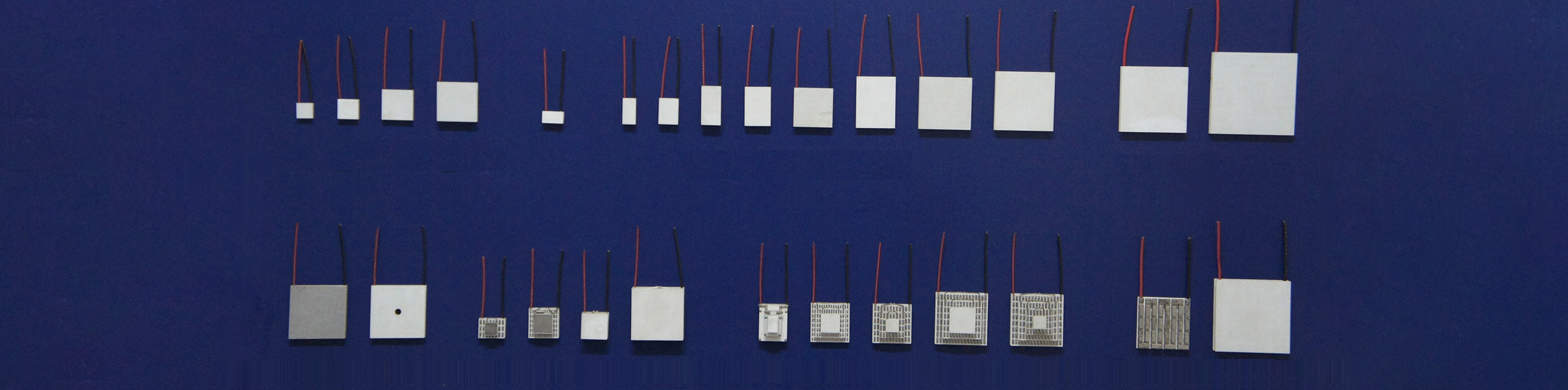
The application of novel thermoelectric materials in cutting-edge domains is rapidly advancing, driven by transformative breakthroughs in materials science. Notably, the synergistic integration of flexibility and miniaturization has liberated thermoelectric cooling technologies from the constraints of conventional rigid architectures, thereby unlocking new application frontiers across multiple high-tech sectors:
Flexible Electronic Skin and Healthcare Applications
The emergence of inorganic flexible thermoelectric materials—such as bismuth telluride (Bi₂Te₃)-based composites and silver chalcogenides—has overcome the long-standing trade-off between high thermoelectric performance and mechanical deformability.
Microscale Hot-Spot Mitigation: Ultra-thin Bi₂Te₃-based thermoelectric coolers, thermoelectric cooling modules(Peltier modules) achieve a temperature reduction exceeding 10 °C under minimal input current (e.g., 84 mA), with an exceptionally fast thermal response time of approximately 25 μs. This enables precise, localized thermal management for high-power-density integrated circuits, thereby enhancing chip reliability and operational stability.
Wearable and Implantable Medical Devices: Owing to their conformal adhesion to biological tissues—akin to electronic skin—flexible thermoelectric devices, peltier devices,(thermoelectric modules) serve dual functions: (i) harvesting thermal energy from body–ambient gradients to power ultra-low-power biomedical sensors (e.g., continuous heart rate monitors); and (ii) enabling high-precision, spatially resolved thermal sensing for early detection of localized inflammation, assessment of peripheral blood perfusion anomalies, and active thermal regulation in next-generation implantable devices—including neural interfaces and brain–computer interfaces.
Extreme Environments and Aerospace Systems
The industrial maturation of third-generation wide-bandgap semiconductors—particularly silicon carbide (SiC) and gallium nitride (GaN)—is progressively extending the operational envelope of semiconductor devices, thermoelectric modules, TEC modules(peltier modules) into extreme conditions.
High-Temperature Sensing and Thermal Control: The intrinsic high breakdown voltage, exceptional thermal stability, and radiation tolerance of SiC and GaN enable robust operation of temperature-sensing and active thermal-control systems in mission-critical environments—including aerospace platforms and high-temperature industrial process monitoring—where stringent accuracy, reliability, and longevity are paramount.
Intelligent Robotics and Tactile Perception
Material innovations extend beyond thermal management to underpin holistic advances in flexible electronics. For example, researchers have fabricated an active-matrix tactile sensor using ultrathin, mechanically compliant two-dimensional semiconductors (e.g., molybdenum disulfide). When integrated onto soft robotic grippers, this sensor detects sub-millipascal-level pressure stimuli—equivalent to the gentle force of an air current on human skin—thereby endowing machines with human-like tactile acuity. The convergence of such high-fidelity tactile perception with adaptive thermal control establishes a foundational hardware platform for future biomimetic, autonomous robotic systems.
Industrial Translation and Domestic Technological Sovereignty
Domestically, concerted efforts by research institutions and industry stakeholders are accelerating the transition of laboratory-scale material innovations into commercially viable products. A representative case is the Shanghai Institute of Ceramics, Chinese Academy of Sciences, which has licensed multiple patents on plastic inorganic thermoelectrics—facilitating their deployment in optical module thermal stabilization, advanced chip-level heat dissipation, and self-powered microsensor applications. These developments signal China’s progressive advancement toward technological self-reliance in advanced semiconductor materials, reducing dependence on foreign supply chains and strengthening domestic capacity for strategic innovation.
Post time: Jun-04-2026


