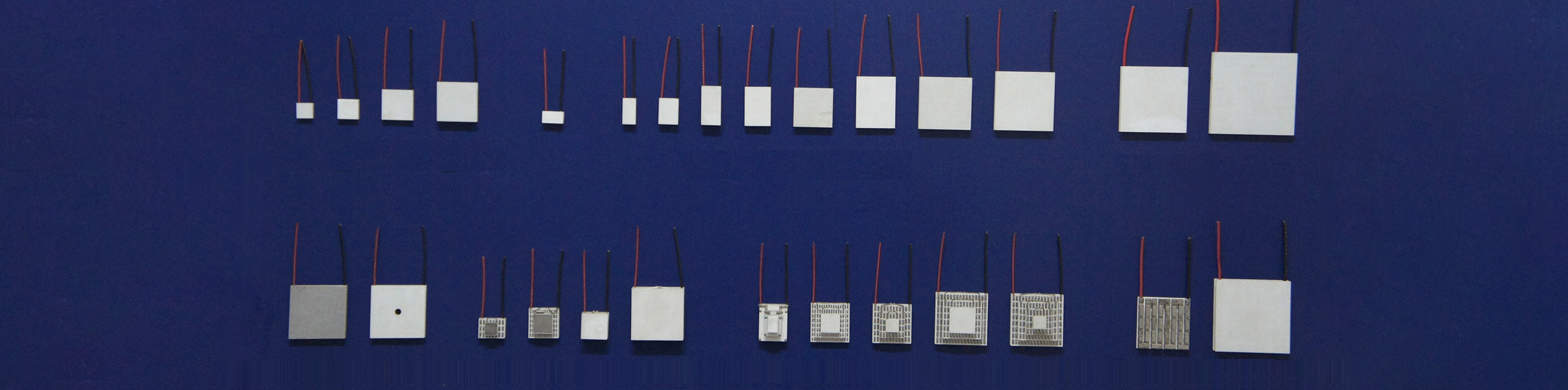
The differences between multi-stage thermoelectric cooling modules(Multi-stage peltier devices) and single-stage thermoelectric cooling modules (peltier elements)
The core difference between multi-stage peltier elements ,peltier devices and single-stage peltier elements ,singel stage peltier coolers lies in their internal structure, the lowest temperature they can reach, and their respective application scenarios. In simple terms, multi-stage peltier devices are designed to achieve the deep cooling effect that single-stage peltier modules can not.
Structure and Working Principle
Single-stage TEC modules,thermoelectric cooling modules: This is the most basic form, consisting of one layer of P-type and N-type semiconductor materials. When powered on, it uses the Peltier effect to transfer heat from one side (the cold end) to the other side (the hot end), achieving cooling.
Multi-stage thermoelectric cooling modules,multi stage peltier coolers: It can be understood as multiple single-stage TEC modules stacked in a “heat series” manner, usually in a pyramid shape. The cold end of the upper stage serves as the heat source for the hot end of the lower stage. Through this “relay cooling” method, each stage further cools down on the basis of the previous stage, thereby achieving deep cooling.
Performance differences
Maximum temperature difference: This is the most significant distinction between the two.
Single-stage thermoelectric cooling module, peltier cooler : The maximum temperature difference is usually around 60-70℃.
Multi-stage thermoelectric cooling module, peltier device : By cascading and stacking, a temperature difference of over 100℃ can be achieved. Some models can even reach ultra-low temperatures below -100℃.
Refrigeration capacity:
Single-stage peltier cooler: The refrigeration power (Qmax) is relatively large, making it suitable for handling large heat loads.
Multi-stage peltier element: Due to its complex structure and energy loss, its refrigeration capacity significantly decreases as the number of stages increases. Therefore, multi-stage thermoelectric modules are suitable for “low heat, deep cooling” scenarios.
Application scenario
Single-stage thermoelectric module(Peltier cooler): Suitable for general heat dissipation or cooling with low temperature requirements, such as small refrigerators, CPU coolers, vehicle cold and warm boxes, etc.
Multi-stage thermoelectric module(TEC module): Specifically designed for special fields that require extremely low temperatures, such as:
Aerospace field: Cooling infrared detectors, radiation spectrometers, etc., to enable them to operate at extremely low temperatures to reduce noise.
Medical field: Acting as an auxiliary cooling screen for nuclear magnetic resonance (MRI) equipment to reduce the consumption of liquid helium.
Scientific instruments: Used for deep-sea sensors, high-end laboratory equipment, etc.
Post time: May-24-2026


