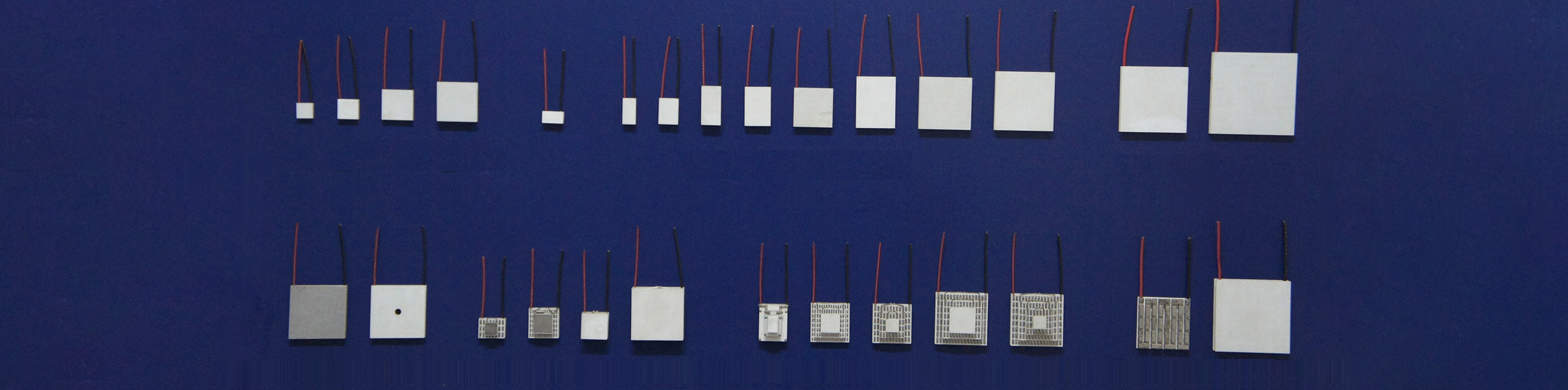
The micro- thermoelectric cooler (micro-TEC) plays a pivotal role in enabling the advancement and operational reliability of artificial intelligence (AI) infrastructure.
Within the AI ecosystem, the micro-TEC, Micro thermoelectric module, micro peltier module functions as both the “thermal control cornerstone” and an “indispensable enabler” for high-performance computing systems. As computational demands surge—driven by large-language model training and real-time inference—the micro-TEC, micro peltier module (micro peltier device) has emerged as a critical determinant of data center efficiency, thermal stability, and system-level resilience. Its strategic importance in AI infrastructure is manifested across four interrelated dimensions:
1. Precision thermal regulation for high-speed optical transceivers
AI data centers rely extensively on next-generation optical modules (e.g., 800G and 1.6T), whose integrated lasers exhibit exceptional thermal sensitivity. A temperature fluctuation as small as ±1 °C can induce wavelength drift, resulting in bit errors, signal degradation, or link failure. The micro-TEC ,micro thermoelectric cooling module (micro-TEC module) delivers ultra-stable thermal management—maintaining laser junction temperature within ±0.05 °C (and down to ±0.01 °C in advanced configurations)—thereby ensuring robust, low-latency, long-haul optical transmission and meeting stringent industry performance specifications.
2. Core thermal mitigation solution for AI-accelerated servers
Modern AI training platforms—equipped with high-power GPUs such as NVIDIA B200, GB300, or AMD MI300X—feature single-GPU power envelopes exceeding 1,000 W, precipitating exponential growth in rack-level thermal density. In a single high-end AI server housing dozens of high-speed optical modules, hundreds to thousands of micro-TECs may be deployed; at the scale of petabyte-class AI clusters, aggregate demand reaches into the millions—or even tens of millions—of units.
3. Enabling component in hybrid liquid–thermoelectric cooling architectures
Conventional air-cooling solutions are increasingly inadequate for ultra-dense AI compute deployments. Liquid cooling has thus become the de facto standard for next-generation high-performance data centers. Within this paradigm, a synergistic “liquid cooling + micro-TEC” architecture has gained broad adoption: liquid cooling addresses bulk heat removal at the rack or chassis level, while micro-TECs, micro- peltier coolers( Micro-peltier elements)
provide localized, dynamic, sub-degree thermal regulation at the chip or component level—jointly optimizing thermal headroom, energy efficiency, and computational uptime.
4. Strategic enabler of domestic supply chain resilience and technological sovereignty
Historically, the high-end micro-TEC ,micro- peltier device ,micro thermoelectric cooling module market has been dominated by Japanese manufacturers. However, the confluence of explosive AI-driven demand and global supply chain imperatives has catalyzed a transformative opportunity for domestic substitution. Leading Chinese enterprises are actively pursuing qualification with Tier-1 optical module suppliers, scaling manufacturing capacity, and advancing R&D—progressively displacing foreign incumbents and strengthening the security, autonomy, and long-term sustainability of the AI hardware value chain.
In summary, despite its miniature form factor and often-invisible integration, the micro-TEC addresses two foundational challenges in AI infrastructure: extreme thermal flux management and sub-centigrade temperature precision. It is therefore not merely a supporting component—but a foundational thermal technology underpinning AI innovation, data center scalability, and national technological competitiveness.
Post time: Aug-24-2026


