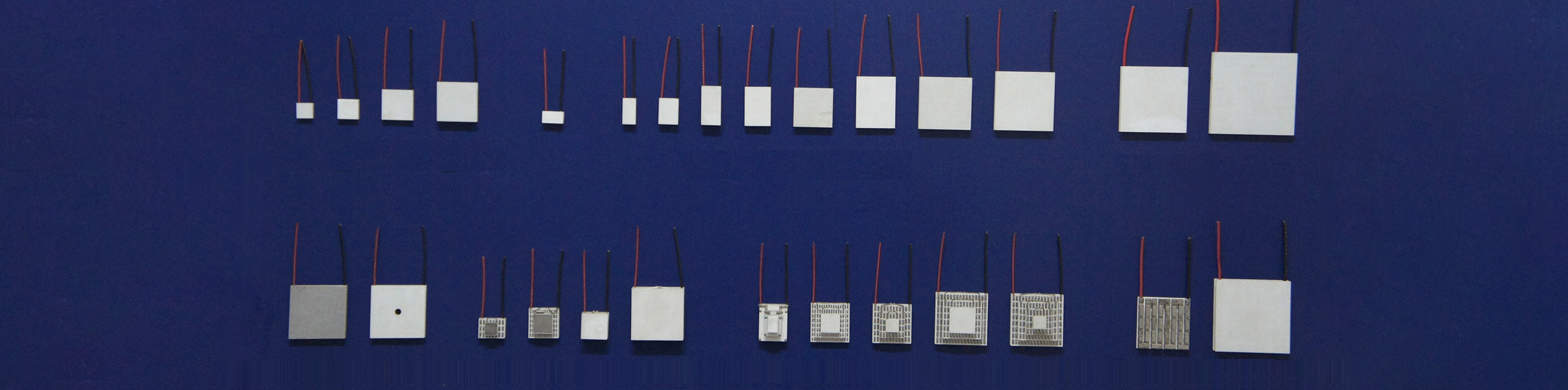
Since 2025, Thermoelectric Cooling (TEC) technology has made remarkable progress in materials, structural design, energy efficiency and application scenarios. The following are the latest technological development trends and breakthroughs at present
I. Continuous optimization of core principles
The Peltier effect remains fundamental: by driving N-type/P-type semiconductor pairs (such as Bi₂Te₃ -based materials) with direct current, heat is released at the hot end and absorbed at the cold end.
Bidirectional temperature control capability: It can achieve cooling/heating simply by switching the current direction, and is widely used in high-precision temperature control scenarios.
II. Breakthroughs in material properties
1. New thermoelectric materials
Bismuth telluride (Bi₂Te₃) remains the mainstream, but through nanostructure engineering and doping optimization (such as Se, Sb, Sn, etc.), the ZT value (optimal value coefficient) has been significantly improved. The ZT of some laboratory samples is greater than 2.0 (traditionally about 1.0-1.2).
Accelerated development of lead-free/low-toxicity alternative materials
Mg₃(Sb,Bi)₂ -based materials
SnSe single crystal
Half-Heusler alloy (suitable for high-temperature sections)
Composite/gradient materials: Multi-layer heterogeneous structures can simultaneously optimize electrical conductivity and thermal conductivity, reducing Joule heat loss.
III, Innovations in the structural system
1. 3D Thermopile design
Adopt vertical stacking or micro channel integrated structures to enhance the cooling power density per unit area.
The cascade TEC module, peltier module,peltier device, thermoelectric module can achieve ultra-low temperatures of -130℃ and is suitable for scientific research and medical freezing.
2. Modular and intelligent control
Integrated temperature sensor + PID algorithm + PWM drive, achieving high-precision temperature control within ±0.01℃.
Supports remote control via the Internet of Things, suitable for intelligent cold chain, laboratory equipment, etc.
3. Collaborative optimization of thermal management
Cold end enhanced heat transfer (microchannel, phase change material PCM)
The hot end adopts graphene heat sinks, Vapor chambers or micro-fan arrays to solve the bottleneck of “heat accumulation”.
IV, application scenarios and fields
Medical and health care: thermoelectric PCR instruments, thermoelectric cooling laser beauty devices, vaccine refrigerated transport boxes
Optical communication: 5G/6G optical module temperature control (stabilizing laser wavelength)
Consumer electronics: Mobile phone cooling back clips, thermoelectric AR/VR headset cooling, peltier cooling mini refrigerators, thermoelectric cooling wine cooler, car refrigerators
New energy: Constant temperature cabin for drone batteries, local cooling for electric vehicle cabins
Aerospace technology: thermoelectric cooling of satellite infrared detectors, temperature control in the zero-gravity environment of space stations
Semiconductor manufacturing: Precision temperature control for photolithography machines, wafer testing platforms
V. Current Technological Challenges
The energy efficiency is still lower than that of compressor refrigeration (COP is usually less than 1.0, while compressors can reach 2-4).
High cost: High-performance materials and precise packaging drive up prices
The heat dissipation at the hot end relies on an external system, which limits the compact design
Long-term reliability: Thermal cycling causes solder joint fatigue and material degradation
VI. Future Development Direction (2025-2030)
Room-temperature thermoelectric materials with ZT > 3 (Theoretical limit breakthrough)
Flexible/wearable TEC devices, thermoelectric modules,peltier modules (for electronic skin, health monitoring)
An adaptive temperature control system combined with AI
Green manufacturing and recycling technology (Reducing Environmental Footprint)
In 2025, thermoelectric cooling technology is moving from “niche and precise temperature control” to “efficient and large-scale application”. With the integration of materials science, micro-nano processing and intelligent control, its strategic value in fields such as zero-carbon refrigeration, high-reliability electronic heat dissipation and temperature control in special environments is increasingly prominent
TES2-0901T125 Specification
Imax:1A,
Umax:0.85-0.9V
Qmax:0.4 W
Delta T max:>90 C
Size : Base size :4.4×4.4mm, top size 2.5X2.5mm,
Height: 3.49 mm.
TES1-04903T200 Specification
Hot side temperature is 25 C,
Imax: 3A,
Umax:5.8 V
Qmax: 10 W
Delta T max:> 64 C
ACR:1.60 Ohm
Size: 12x12x2.37mm
Post time: Dec-08-2025


