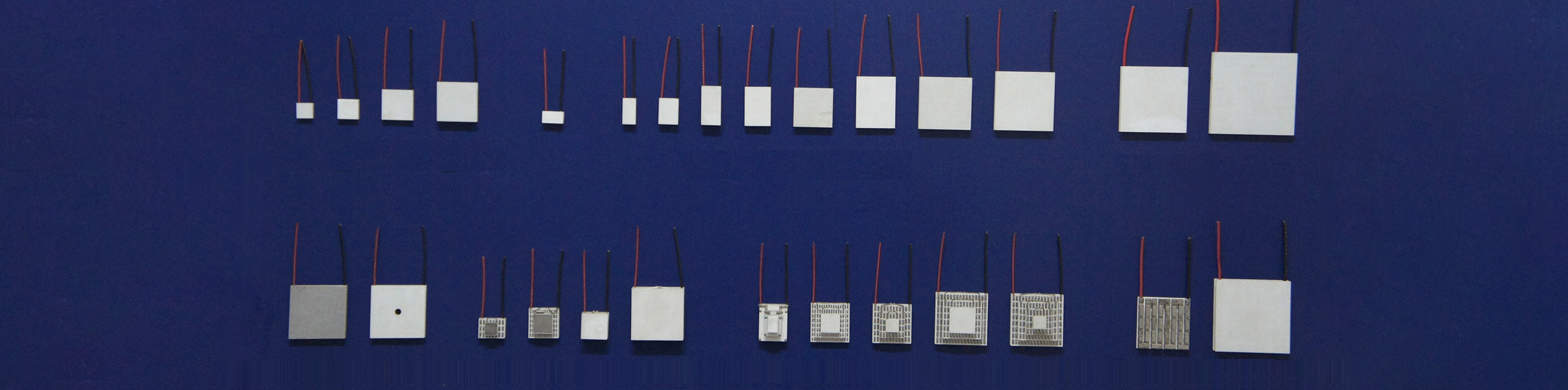
The micro thermoelectric cooler (Micro TEC), also referred to as the micro thermoelectric cooling module,Micro-peltier module,Micro peltier element, has been widely adopted across multiple high-technology sectors owing to its distinctive physical properties and superior engineering compatibility. Its primary applications are concentrated in domains demanding stringent performance criteria—including temperature stability, rapid thermal response, spatial compactness, and electromagnetic compatibility—spanning optical communications, consumer electronics, biomedical instrumentation, automotive electronics, aerospace and defense systems, and industrial precision equipment.
I. Optical Communications (Strategic Core Application)
Micro TECs,Micro thermoelectric modules,Micro peltier devices serve as critical temperature-control components for lasers in high-speed optical transceivers (e.g., 10G, 25G, 100G, 400G, and 800G modules). By maintaining laser junction temperature within ±0.1°C, they effectively suppress wavelength drift and inter-channel crosstalk, thereby ensuring signal integrity and reliability in high-bandwidth data transmission. The escalating demand for low-latency, high-throughput optical interconnects—driven by AI-intensive computing infrastructure in data centers and AI training clusters—has significantly accelerated Micro TEC market (micro peltier module) growth. While high-end solutions remain dominated by global leaders such as Ferrotec and KELK, domestic manufacturers are making steady progress in advancing thermoelectric material systems, hermetic packaging technologies, and system-level integration capabilities, facilitating gradual yet sustained localization of supply chains.
II. Consumer Electronics
Micro TECs,Micro thermoelectric cooling modules are increasingly deployed in thermal management solutions for portable and compact devices—including smartphone auxiliary cooling clamps, desktop thermoelectric water dispensers (hot/cold), micro-scale PCR instruments, and USB-powered mini-refrigerators. Their solid-state architecture—characterized by zero moving parts, negligible vibration, ultra-low acoustic noise, and sub-millimeter form factors—aligns closely with key design imperatives in consumer electronics: miniaturization, silent operation, and seamless integration.
III. Biomedical Instrumentation
In vitro diagnostics (IVD) and life science platforms rely on Micro thermoeletric modules,Micro peltier elements ,Micro TECs for precise, dynamic thermal regulation:
(1) In real-time quantitative polymerase chain reaction (qPCR) systems, Micro TECs ,Micro thermoelectric modules enable millisecond-scale thermal cycling (heating rate ≥ 3°C/s; cooling rate ≥ 2°C/s), ensuring amplification specificity and assay reproducibility;
(2) Portable cold-chain transport containers for pharmaceuticals and vaccines maintain a stable 2–8°C operating range, satisfying WHO prequalification requirements for temperature-controlled logistics;
(3) In hematology and clinical chemistry analyzers, localized cooling of CCD/CMOS image sensors (operating range: −10°C to +5°C) substantially reduces dark current noise and enhances signal-to-noise ratio;
(4) In aesthetic medical devices—including semiconductor-based laser hair removal systems and intense pulsed light (IPL) platforms—Micro peltier coolers,Micro TECs provide epidermal cooling to improve treatment safety, efficacy, and patient comfort.
IV. Automotive Electronics
With the proliferation of intelligent connected vehicles and advanced driver-assistance systems (ADAS), Micro TEC modules,Micro TECs are employed for thermal compensation in LiDAR transmitter/receiver units, ensuring consistent optical performance across extreme ambient conditions (−40°C to +85°C). They are also integrated into cabin climate control subsystems, such as vehicle-mounted smart refrigerators. Featuring 12 V DC input, low power consumption (< 5 W typical), high mechanical robustness (vibration- and shock-resistant), and ultra-compact footprint (< 10 mm²),Micro thermoelectric modules,Micro peltier modules, Micro TECs meet rigorous automotive-grade reliability and space-constrained design requirements.
V. Aerospace and Defense
Micro TECs have demonstrated successful in-orbit functionality in satellite payload thermal management systems. For instance, domestically developed units were validated aboard the “Lianjian-1” launch vehicle, enabling active thermal regulation of mission-critical electronics—including onboard optical communication modules and high-sensitivity infrared focal plane arrays—in the harsh space environment. Additionally, they support airborne infrared detectors and scientific-grade airborne CCD imaging systems, where exceptional thermal stability is essential for high-resolution remote sensing and precision target identification.
VI. Industrial Precision Instruments
Key applications include:
(1) Temperature stabilization of fiber and ultrafast laser pump sources (stability ≤ ±0.05°C), ensuring output power consistency and beam quality fidelity;
(2) Deep-cooling of mercury cadmium telluride (MCT) or HgCdTe infrared detectors in thermal imagers and spectroscopic analyzers (down to −40°C), markedly suppressing thermal noise and improving detection sensitivity;
(3) Cryogenic operation of scientific CMOS cameras used in astronomical observation and semiconductor wafer defect inspection, where reduced dark current enables extended exposure times and higher image fidelity;
(4) Condensation-prevention modules for electrical control cabinets in high-humidity environments, utilizing localized cooling to actively regulate dew point and ensure long-term operational reliability.
The technical uniqueness and irreplaceability of the Micro TEC,micro thermoelectric module stem from the solid-state Peltier effect, which confers a synergistic set of advantages:
• High-precision dynamic thermal control: millisecond-scale thermal response time; steady-state temperature regulation accuracy better than ±0.1°C;
• Silent, vibration-free operation: absence of rotating or reciprocating mechanical elements—ideal for optical alignment-sensitive, sensing, and imaging applications;
• Extreme miniaturization and embeddability: compatible with chip-on-board (COB) packaging and hermetic integration within device housings, enabling sub-millimeter localized thermal control;
• Environmental sustainability: refrigerant-free operation; zero emissions of ozone-depleting substances or greenhouse gases; fully compliant with RoHS and REACH regulatory standards.
TES1-00401T125 Specification
Imax:0.8A,
Umax: 0.48V
Qmax:0.3W
Delta T max: 76C
ACR:0.5﹢/﹣0.1Ω
Size: 2.3×1.1×0.95mm
Post time: Jul-28-2026


