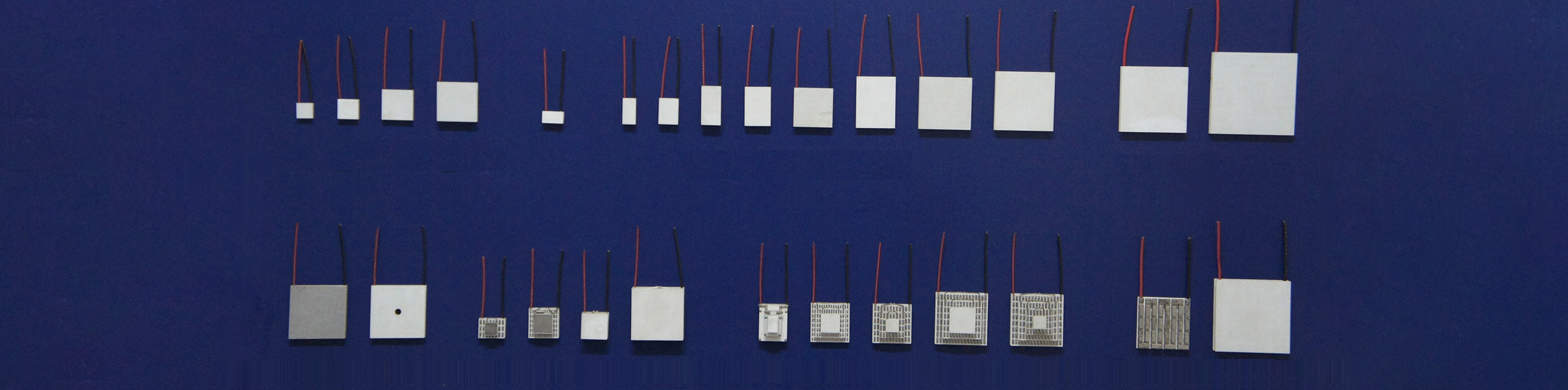
Thermoelectric Cooling Devices in Frontier Technological Applications
Thermoelectric cooling devices, thermoelectric cooling modules—commonly referred to as thermoelectric coolers (TECs)—are solid-state thermal management solutions that operate without moving parts, enabling silent, highly responsive, and precisely controllable cooling. Their inherent advantages—including compact form factor, scalability, reliability under extreme conditions, and localized temperature regulation—have positioned them as critical enablers across multiple frontier domains, including artificial intelligence infrastructure, high-speed optical communications, cryogenic science, microelectronics thermal management, biomedical systems, and aerospace/deep-sea exploration.
1. AI Computing Infrastructure and High-Speed Optical Communications
The escalating power density of AI accelerators and the deployment of 800G/1.6T optical transceivers have intensified thermal challenges in next-generation computing and communication systems. TECs address this “heat wall” by delivering spatially targeted, high-precision thermal regulation.
• Optical module stabilization: Laser diodes in high-speed optical modules exhibit strong wavelength dependence on temperature. By direct integration with the optical chip, thermoelectric modules, peltier devices, TECs maintain junction temperature within ±0.5 °C, thereby minimizing wavelength drift and reducing bit error rates (BER) in data transmission.
• AI server thermal management: In high-density AI compute racks, peltier elements,Thermoelectric modules ,TECs are increasingly engineered for high heat flux density (>100 W/cm²) and low specific power consumption, providing dynamic, chip-level temperature stabilization for GPUs, TPUs, and interconnects.
2. Advanced Scientific Instrumentation and Deep-Cryogenic Detection
Emerging thermoelectric materials and architectures are extending operational limits into ultra-low-temperature regimes while enhancing detection fidelity.
• Deep-cryogenic cooling: Researchers at Tongji University developed a Thomson cooler based on the YbInCu₄ phase-transition material. Operating in the 38 K regime (~−235 °C), it achieved a stable cooling ΔT exceeding 5 K—representing a breakthrough in solid-state cryocooling for quantum and low-temperature physics applications.
• High-sensitivity imaging: Miniaturized multi-stage TECs, miniaturized multi-stage peltier modules(TEC modules) enable detector cooling to −60 °C–−80 °C in infrared focal plane arrays, X-ray spectrometers, and astronomical sensors. This suppression of thermal noise significantly improves signal-to-noise ratio (SNR), facilitating high-resolution imaging under ultra-low-light or vacuum conditions.
3. Microscale Thermal Management for Advanced Electronics
As semiconductor nodes advance below 3 nm, localized hotspots threaten performance, reliability, and yield. Micro-thermoelectric coolers (micro-TECs),micro thermoelectric modules, mico peltier elements offer on-die or near-die thermal regulation with sub-millisecond response times.
• Novel material integration: A research team at Harbin Institute of Technology (Shenzhen) fabricated a magnesium–bismuth–based micro-TEC, micro peltier module (micro peltier device) exhibiting superior room-temperature cooling power density (>500 W/cm³) and rapid transient response. It has been successfully deployed for active thermal regulation of microcontroller unit (MCU) cores.
• On-chip and component-level cooling: Micro-TECs,micro- peltier elements,micro thermoelectric modules, Micro TEC modules are directly integrated onto high-performance CPUs, LiDAR emitters, and RF front-end modules. Their footprint-compatible design enables hotspot elimination at the micron scale, ensuring sustained computational integrity under sustained thermal load.
4. Biomedical Devices and Cold-Chain Monitoring
TECs ,TEC modules(thermoelectric cooling modules) support mission-critical biomedical functions through passive energy harvesting and active thermal control—both essential for implantable and logistics-sensitive applications.
• Implantable power and cooling: MIT researchers demonstrated an ultrathin, flexible thermoelectric film implanted subcutaneously in porcine models. Leveraging the ~2.5 K temperature gradient between core body tissue and epidermis, the device powered a cardiac pacemaker continuously for nine months—validating long-term bio-integrated energy autonomy.
• Autonomous cold-chain monitoring: Temperature-sensitive tags incorporating thermoelectric generators (TEGs) were deployed in Pfizer’s mRNA vaccine logistics. These self-powered sensors harvest thermal energy from the cargo hold’s internal–external temperature differential to drive wireless telemetry—eliminating battery dependency and enabling continuous, tamper-resistant temperature logging throughout transit.
5. Harsh-Environment Systems: Aerospace and Deep-Sea Exploration
Thermoelectric technology delivers robust, maintenance-free thermal and power management in environments where conventional systems fail—particularly under vacuum, radiation exposure, or extreme thermal gradients.
• Deep-ocean and orbital platforms: In the Japan-led Mariana Trench Observation Network, modular thermoelectric generators (TEGs) convert the >340 K gradient between hydrothermal vent fluid (~350 °C) and ambient seawater (~2 °C) into kilowatt-level continuous power for deep-sea HD video systems. Concurrently, thermoelectric superlattice structures have been integrated into the International Space Station’s experimental module for waste-heat recovery and precision thermal control.
• Defense and space-based infrared sensing: Vacuum-compatible, non-evaporative micro multi-stage TECs ,micro multi-stage peltier modules micro multi stage thermoelectric cooling modules, micro thermoelectric coolers,are widely adopted in satellite-borne and airborne infrared detectors. Their ability to achieve <100 K detector temperatures within ultra-compact footprints supports high-sensitivity, long-wave infrared (LWIR) imaging for strategic surveillance and Earth observation.
Post time: Jun-15-2026


